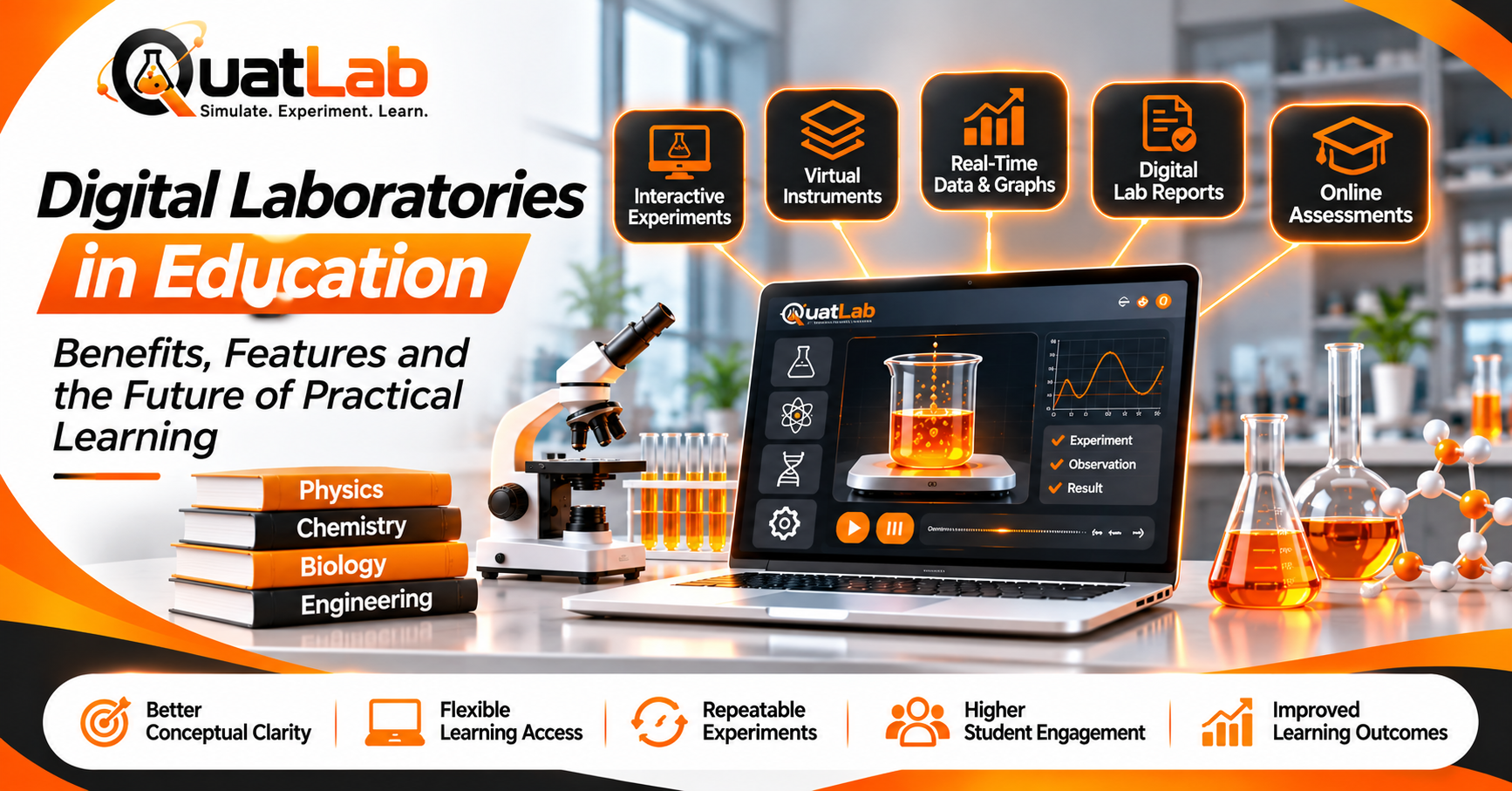
Digital Laboratories in Education: Benefits, Features and the Future of Practical Learning
Introduction
Education is evolving rapidly with the integration of digital technologies. Traditional teaching methods are increasingly being supported by interactive learning platforms, simulation software, and technology-driven educational tools.
One of the most important developments in modern education is the emergence of digital laboratories.
Digital laboratories provide technology-supported environments where students can explore scientific concepts, perform virtual experiments, analyze results, and improve their practical understanding.
Unlike conventional laboratories that depend entirely on physical equipment, digital laboratories use software, interactive simulations, and virtual instruments to create additional opportunities for practical learning.
For schools, colleges, universities, and technical institutions, digital laboratories can help make practical education more flexible, accessible, and engaging.
In this article, we will explore the benefits, features, applications, and future of digital laboratories in education.
1. What Are Digital Laboratories?
Digital laboratories are technology-enabled learning environments that support practical experimentation through digital tools and software.
They may include virtual experiments, interactive simulations, digital instruments, data visualization, and online assessment systems.
Students can use these environments to explore different concepts, perform supported experiments, observe results, and develop a better understanding of theoretical subjects.
Digital laboratories are particularly useful in subjects where practical experimentation plays an important role, including:
-
Physics
-
Chemistry
-
Biology
-
Electronics
-
Engineering
-
Computer Science
They help connect theoretical education with technology-supported practical experiences.
2. Why Are Digital Laboratories Important in Modern Education?
Traditional educational systems often face challenges in providing sufficient practical opportunities to every student.
Limited laboratory equipment, infrastructure costs, maintenance requirements, and restricted laboratory schedules can affect practical learning.
Digital laboratories provide an additional approach to addressing these challenges.
A. Flexible Practical Learning
Students can access supported digital experiments without always depending on physical laboratory schedules.
This flexibility allows learners to revisit concepts and practice experiments when needed.
B. Better Understanding of Scientific Concepts
Digital simulations can represent complex scientific processes through interactive visualizations.
Students can observe how different experimental parameters influence results and develop stronger conceptual understanding.
C. More Opportunities for Experimentation
Repeating experiments is an important part of practical education.
Digital laboratories allow students to repeat supported simulations, modify parameters, and compare different outcomes.
D. Technology-Driven Education
Digital laboratories introduce students to modern educational technologies and encourage familiarity with digital learning environments.
E. Support for Teachers
Digital learning platforms can help educators demonstrate concepts, organize practical activities, and assess student understanding.
3. Essential Features of a Modern Digital Laboratory
A well-designed digital laboratory can include several features that support effective practical learning.
1. Interactive Experiments
Interactive experiments allow students to participate actively in practical learning activities.
Students can use digital controls, change parameters, and explore experimental outcomes.
2. Virtual Laboratory Instruments
Digital instruments provide simulated tools that help students understand how laboratory equipment is used during experiments.
3. Real-Time Data Visualization
Measurements, graphs, and visual representations help students observe experimental changes and understand relationships between different variables.
4. Digital Lab Reports
Digital laboratory reports help organize experiment objectives, procedures, observations, calculations, and conclusions.
They also make it easier to maintain structured digital records of practical activities.
5. Online Assessments
Digital assessments can help evaluate theoretical knowledge and practical understanding through quizzes and other evaluation activities.
6. Student Performance Monitoring
Where supported, digital dashboards and analytics can help teachers monitor experiment completion, assessment performance, and learning progress.
4. Applications of Digital Laboratories Across Different Subjects
Digital laboratories can support practical education across several academic disciplines.
Physics Laboratories
Physics digital laboratories can help students explore:
-
Mechanics and motion
-
Electricity and magnetism
-
Optics
-
Thermodynamics
-
Waves and oscillations
-
Scientific measurements
Interactive experiments help learners understand physical principles through simulation-based activities.
Chemistry Laboratories
Chemistry digital laboratories can support learning in:
-
Chemical reactions
-
Acid-base titration
-
pH measurements
-
Organic chemistry
-
Analytical chemistry
-
Chemical bonding
Digital simulations can provide opportunities to explore experimental procedures in a controlled environment.
Biology Laboratories
Biology laboratories can use digital learning environments to explain:
-
Cell structures
-
Genetics
-
Microbiology
-
Human anatomy
-
Plant biology
-
Biological processes
Visual learning tools can help students understand complex biological structures.
Electronics Laboratories
Electronics practical learning can include:
-
Analog circuits
-
Digital circuits
-
Logic gates
-
Electronic components
-
Sensors
-
Circuit analysis
Virtual experiments can help students explore circuit behavior and electronic concepts.
Engineering Laboratories
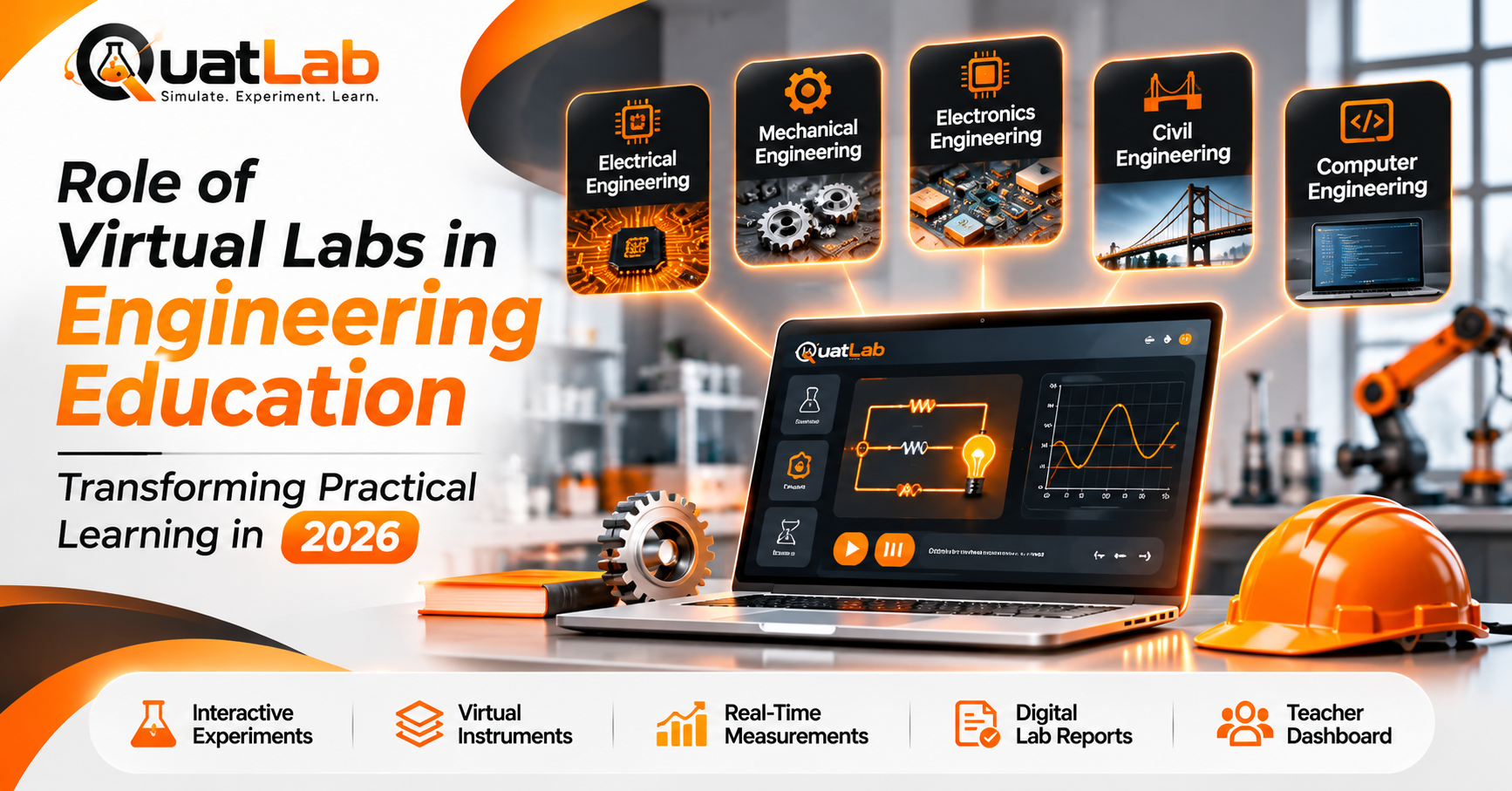
Engineering education can benefit from digital experimentation and simulation-based activities involving mechanical systems, electrical concepts, engineering measurements, and technical principles.
5. Benefits of Digital Laboratories for Educational Institutions
Digital laboratories can provide several advantages to schools, colleges, and universities.
Improved Learning Accessibility
Digital platforms can extend access to supported practical learning activities beyond traditional laboratory schedules.
Reduced Dependence on Physical Resources
Institutions can complement existing laboratory facilities with digital experiments, reducing dependence on additional physical resources for selected learning activities.
Better Learning Engagement
Interactive simulations can encourage students to participate actively rather than relying exclusively on theoretical explanations.
Repeatable Practical Activities
Students can repeat supported experiments to improve their understanding and explore different experimental conditions.
Digital Documentation
Electronic laboratory reports and digital records can help organize practical learning activities.
Scalable Learning Opportunities
Digital laboratory environments can help educational institutions extend practical learning across multiple classes and disciplines.
6. Digital Laboratories vs Traditional Laboratories
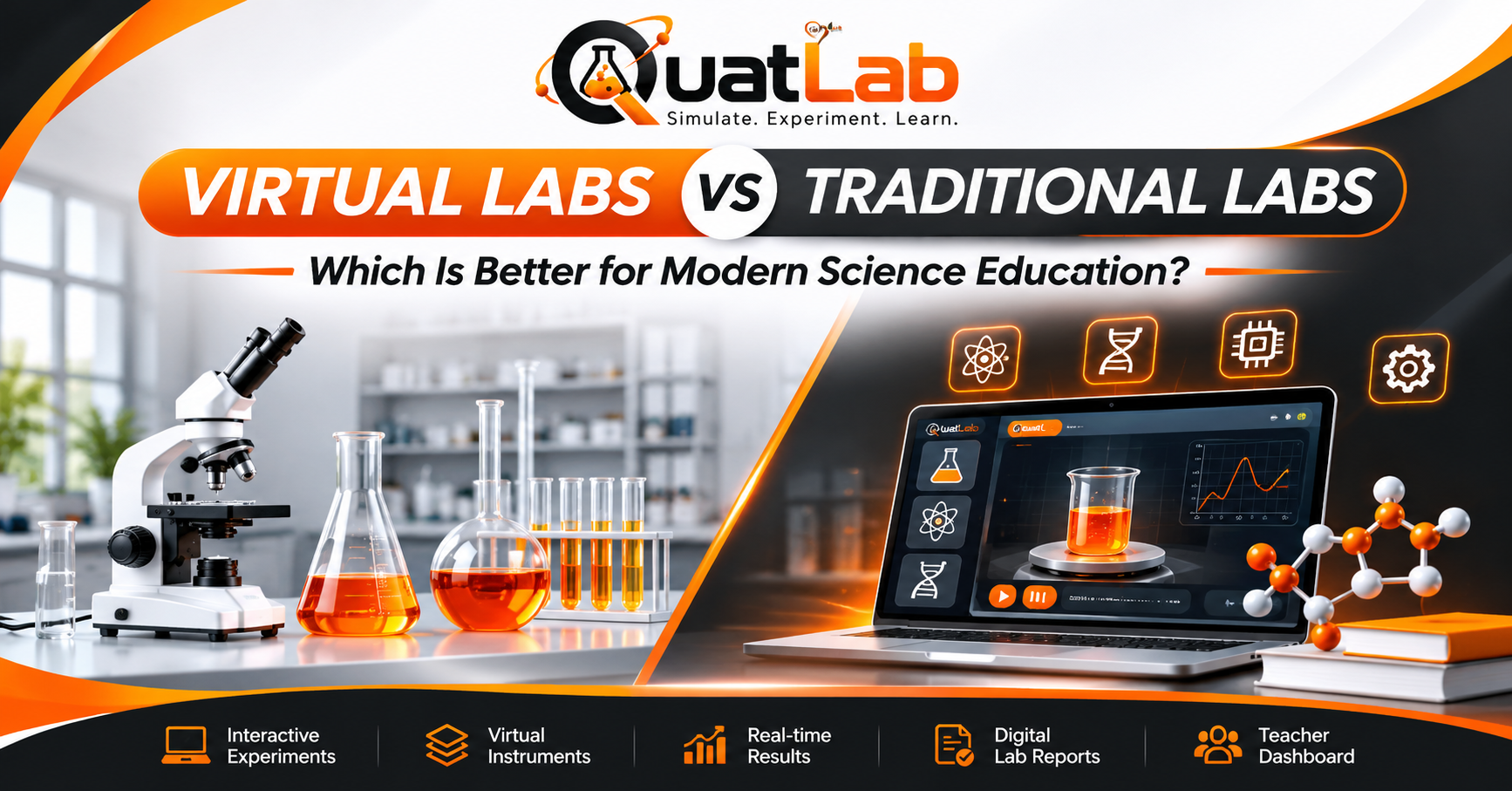
Digital and traditional laboratories have different strengths.
| Digital Laboratories | Traditional Laboratories |
|---|---|
| Digital experiments | Physical experiments |
| Software-based simulations | Physical instruments |
| Flexible access to supported activities | Scheduled laboratory sessions |
| Repeatable digital simulations | Hands-on experiment repetition |
| Digital records and reports | Physical or digital lab records |
| Visual data representations | Direct experimental observations |
Digital laboratories are not a complete replacement for physical laboratories.
Students still need real-world experience with equipment, materials, safety procedures, and practical techniques.
Combining digital and traditional laboratory experiences can create a more comprehensive learning environment.
7. How QUATLAB Supports Digital Practical Learning
QUATLAB is a virtual laboratory platform designed to support interactive experiments and technology-driven practical education.
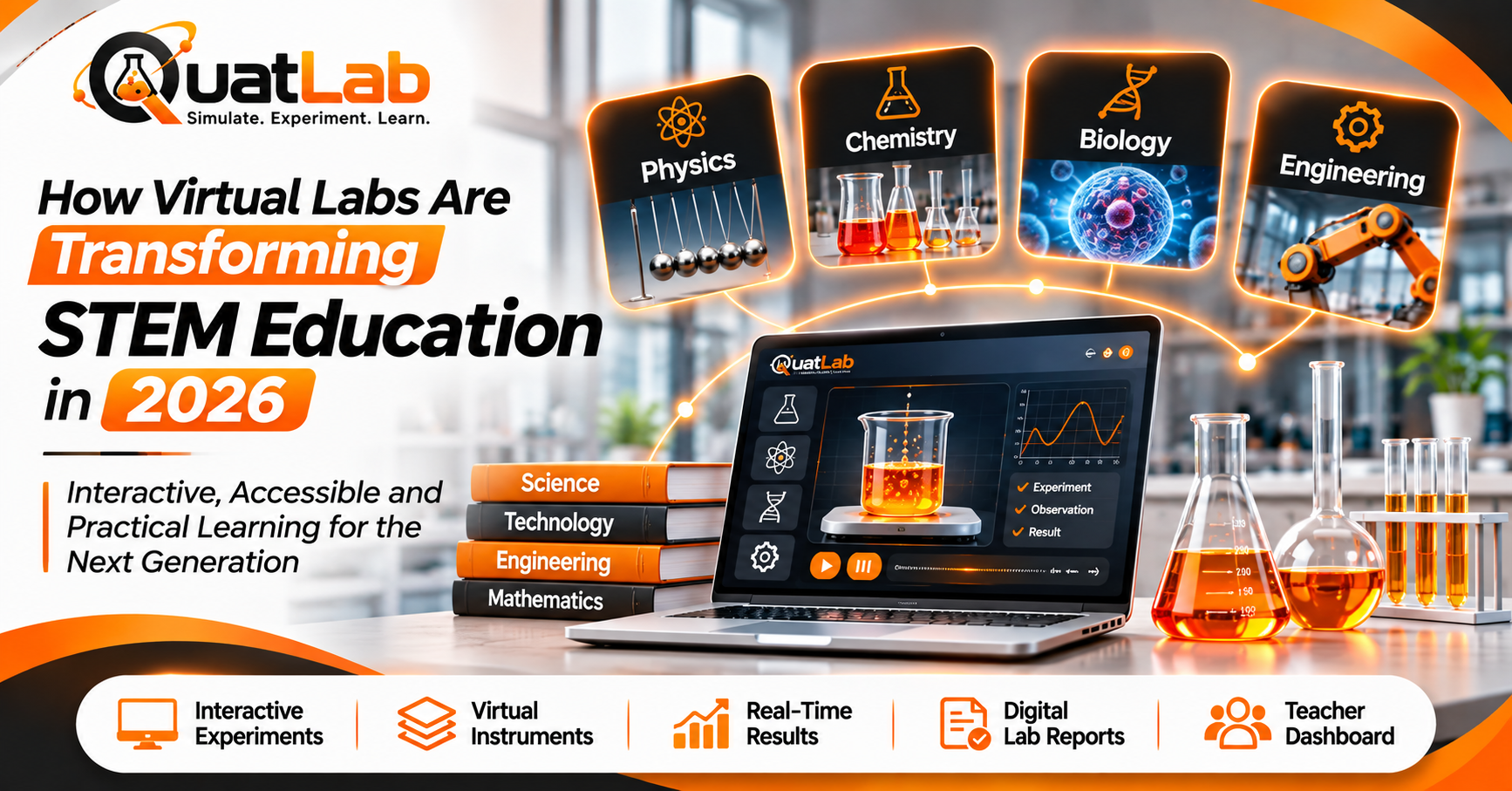
It brings together multiple scientific disciplines, including Physics, Chemistry, Biology, Electronics, and Engineering.
The platform supports digital practical learning through features such as:
Interactive Experiments: Explore scientific concepts through digital simulations.
Virtual Instruments: Use digital laboratory tools and interactive controls.
Real-Time Measurements: Observe experimental values and changing parameters.
Graphs and Data Analysis: Understand experimental results through visual representations.
Digital Lab Reports: Organize experiment objectives, procedures, observations, and conclusions.
Digital Assessments: Evaluate theoretical knowledge and practical understanding.
Teacher Dashboard: Support experiment management and student progress monitoring.
With its digital laboratory approach, QUATLAB aims to make practical learning more interactive and accessible for students and educators.
8. Challenges and Considerations in Digital Laboratory Implementation
Although digital laboratories offer several opportunities, institutions should consider a few important factors before implementation.
Internet Connectivity
Reliable internet access may be necessary for cloud-based digital laboratory platforms.
Device Availability
Students need compatible computers, tablets, or other supported devices.
Teacher Training
Educators should understand how to integrate digital experiments into their teaching activities.
Curriculum Alignment
Digital laboratory activities should match academic objectives, subject requirements, and learning outcomes.
Physical Practical Experience
Digital simulations should complement physical laboratory activities wherever hands-on skills are required.
Considering these factors can help institutions implement digital laboratory solutions more effectively.
9. The Future of Digital Laboratories in Education
The future of digital laboratories will be influenced by developments in artificial intelligence, simulation technology, cloud computing, data analytics, and interactive learning platforms.
Some important developments include:
AI-Assisted Learning: Intelligent educational tools may help students understand difficult concepts and receive guided assistance.
Advanced Simulations: More detailed simulations can provide opportunities to explore complex scientific and engineering processes.
Cloud-Based Laboratories: Cloud technology can support access to digital learning resources across different devices and locations.
Learning Analytics: Data-driven insights can help educators understand student participation and learning progress.
Interactive Digital Assessments: Technology-supported assessment systems can provide additional ways to evaluate practical understanding.
These developments can help create more connected, flexible, and technology-driven practical education environments.
Conclusion
Digital laboratories are changing how students interact with practical education.
By combining virtual experiments, interactive simulations, digital instruments, and assessment tools, they provide additional opportunities to understand scientific concepts and explore practical applications.
For educational institutions, digital laboratories can complement traditional facilities, support flexible learning, and encourage greater student participation.
As education continues to embrace technological innovation, platforms like QUATLAB can contribute to the development of smarter and more interactive laboratory learning experiences.
Simulate. Experiment. Learn.
Explore the future of practical education with QUATLAB.
Visit: https://www.quatlab.com/
Frequently Asked Questions (FAQs)
1. What is a digital laboratory in education?
A digital laboratory is a technology-enabled learning environment that uses software, simulations, and interactive tools to support practical education.
2. What are the main benefits of digital laboratories?
The main benefits include flexible learning access, interactive experiments, repeatable simulations, digital documentation, and additional practical learning opportunities.
3. Which subjects can use digital laboratories?
Digital laboratories can support Physics, Chemistry, Biology, Electronics, Engineering, and other technical subjects.
4. Are digital laboratories better than traditional laboratories?
Both serve different purposes. Digital laboratories support simulation-based learning, while traditional laboratories provide hands-on experience with real equipment.
5. How do digital laboratories help students?
They help students explore concepts, perform supported experiments, analyze results, and improve their practical understanding.
6. Can digital laboratories be used in colleges and universities?
Yes. Colleges and universities can integrate digital laboratory platforms into suitable courses to complement classroom teaching and physical practical sessions.
7. What is QUATLAB?
QUATLAB is a virtual laboratory platform designed to support interactive experiments, digital practical learning, and technology-driven education across multiple scientific disciplines.