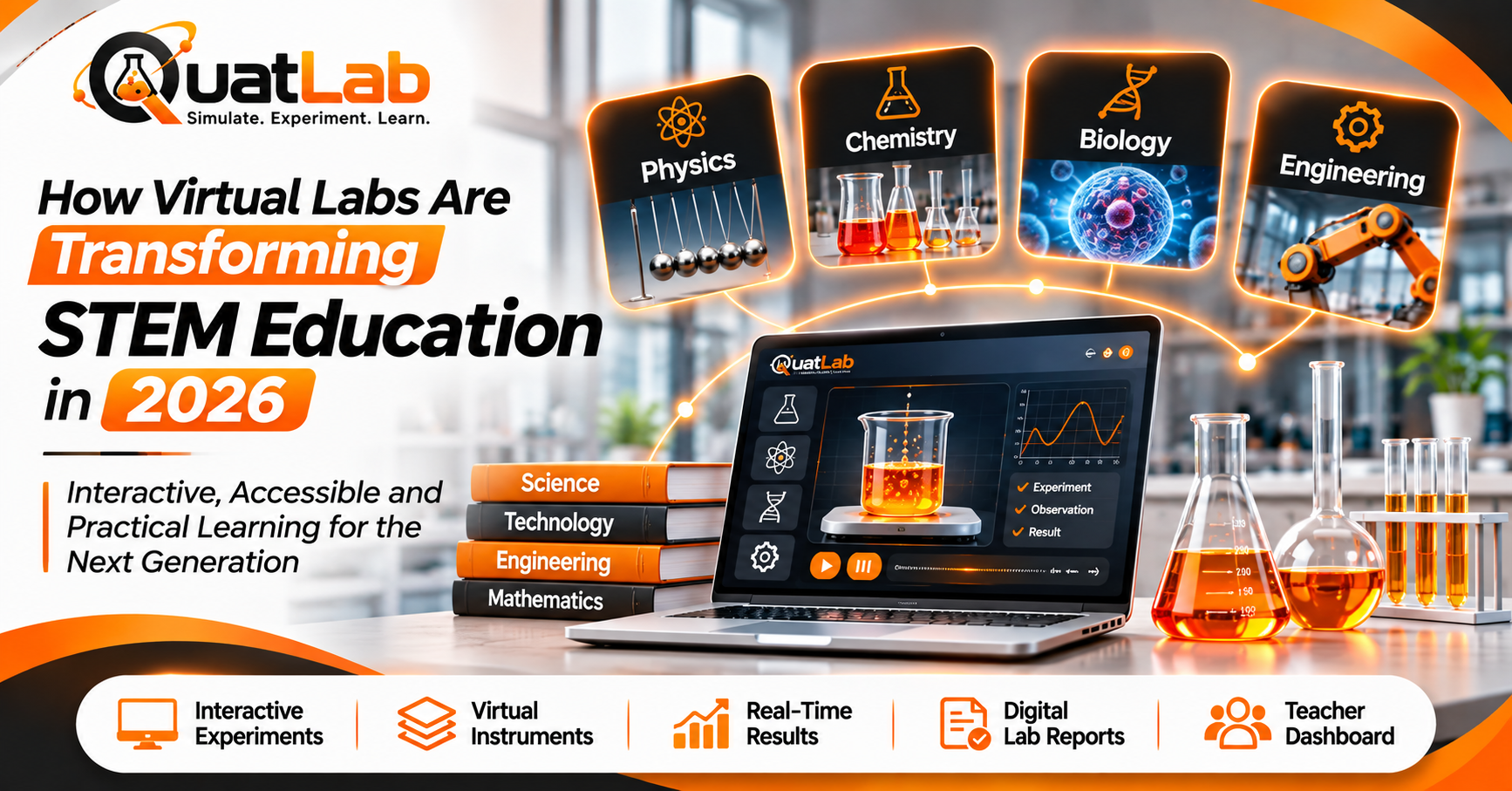
How Virtual Labs Are Transforming STEM Education in 2026
Introduction
Science, Technology, Engineering, and Mathematics (STEM) are essential fields shaping the future of education, innovation, and technological development.
Modern education is moving beyond traditional classroom teaching. Students need opportunities to explore scientific concepts, perform experiments, solve problems, and develop practical skills.
However, traditional STEM education can face challenges such as limited laboratory resources, expensive equipment, restricted access to experiments, and insufficient opportunities for repeated practice.
This is where virtual labs in STEM education are making a difference.
Virtual laboratories provide interactive digital environments where students can perform simulated experiments, explore scientific principles, understand complex concepts, and improve their practical knowledge.
With platforms like QUATLAB, educational institutions can introduce a more interactive and technology-driven approach to practical learning.
1. What Is STEM Education?
STEM education combines four important academic disciplines:
-
Science: Understanding natural phenomena, scientific principles, and experimentation.
-
Technology: Exploring digital tools, software, and technological applications.
-
Engineering: Applying scientific and mathematical knowledge to solve practical problems.
-
Mathematics: Developing analytical, logical, and problem-solving abilities.
The main objective of STEM education is to help students develop critical thinking, creativity, technical knowledge, and practical problem-solving skills.
Instead of focusing only on theoretical learning, STEM encourages students to understand how different concepts work together in real-world applications.
2. What Are Virtual Labs in STEM Education?
Virtual laboratories are digital platforms that allow students to perform experiments using interactive simulations and virtual instruments.
They create an environment where learners can explore different scientific and technical concepts without always depending on physical laboratory equipment.
Students can interact with digital experiments, change parameters, observe results, analyze data, and repeat supported activities.
Virtual laboratories can be used to support learning in:
-
Physics
-
Chemistry
-
Biology
-
Electronics
-
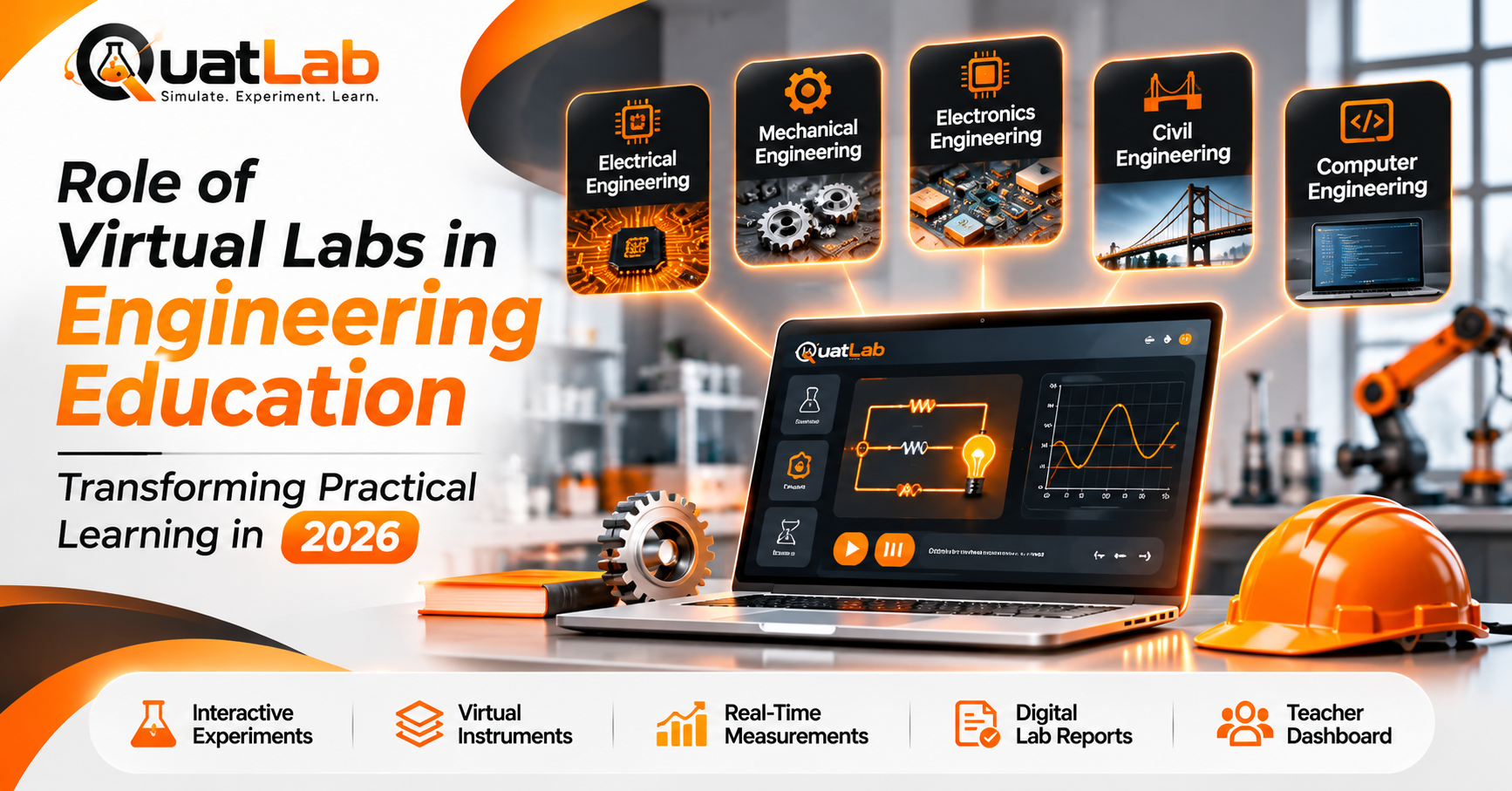
Engineering
-
Other STEM-related subjects
These digital environments provide additional opportunities for students to connect classroom concepts with practical experimentation.
3. Why Virtual Labs Are Important for STEM Learning
A. Making Science More Interactive
Traditional classroom teaching often depends on textbooks, presentations, and theoretical explanations.
Virtual labs introduce interactive simulations that allow students to participate in experiments.
For example, students can explore scientific relationships by changing experimental values and observing how the results change.
This encourages active participation and curiosity.
B. Improving Conceptual Understanding
Some scientific and mathematical concepts are difficult to understand through written explanations alone.
Virtual experiments can represent complex processes through visual demonstrations, digital instruments, graphs, and interactive controls.
These features help students explore how different scientific principles work.
C. Encouraging Independent Learning
Students learn at different speeds.
Some learners need additional time and repeated practice to understand a particular experiment.
Virtual laboratories can provide flexible access to supported experiments, helping students explore concepts and repeat activities independently.
D. Supporting Practical Experimentation
STEM education requires more than theoretical knowledge.
Students need opportunities to explore experimental procedures, observe results, and understand scientific measurements.
Virtual labs can provide additional simulation-based practice alongside traditional practical activities.
E. Developing Problem-Solving Skills
Virtual experiments encourage students to change parameters, compare results, and investigate different outcomes.
This process can help develop analytical thinking, experimentation skills, and problem-solving abilities.
4. Applications of Virtual Labs Across STEM Subjects
Virtual laboratories can support practical learning across different STEM disciplines.
Physics
Physics experiments help students understand the fundamental principles of the physical world.
Virtual physics laboratories can support topics such as:
-
Mechanics
-
Motion and forces
-
Electricity and magnetism
-
Optics
-
Thermodynamics
-
Waves and oscillations
Interactive simulations help students explore physical relationships and understand experimental outcomes.
Chemistry
Chemistry involves studying substances, chemical reactions, and molecular interactions.
Virtual chemistry laboratories can support:
-
Chemical reactions
-
Acid-base titration
-
pH measurements
-
Organic chemistry
-
Analytical chemistry
-
Chemical bonding
Students can explore supported experiments in a controlled digital environment.
Biology
Biology focuses on living organisms, cells, genetics, and biological processes.
Virtual biology experiments can help students explore:
-
Cell biology
-
Genetics
-
Microbiology
-
Human anatomy
-
Plant biology
-
Biological systems
Digital visualizations can make complex biological structures and processes easier to explore.
Technology and Electronics
Technology-related practical learning can include:
-
Electronic circuits
-
Digital logic
-
Sensors
-
Microcontrollers
-
Circuit analysis
-
Computer-based experiments
Virtual experiments can help students understand how electronic components and technical systems work.
Engineering and Mathematics
Engineering and mathematics involve applying theoretical knowledge to solve practical problems.
Virtual learning environments can support engineering simulations, mathematical visualization, measurements, and technical problem-solving activities.
5. Benefits of Virtual Labs for Schools and Colleges
Virtual laboratories can provide several benefits to educational institutions.
1. Flexible Learning Access
Students can access supported digital experiments without always depending on fixed physical laboratory schedules.
2. Better Resource Utilization
Institutions can complement existing laboratory infrastructure with digital practical learning environments.
3. Repeatable Experiments
Students can repeat supported simulations to explore different conditions and improve their understanding.
4. Interactive Teaching
Teachers can use digital experiments to demonstrate complex concepts and make lessons more engaging.
5. Digital Performance Monitoring
Depending on platform capabilities, educators can review experiment completion, assessment results, and student learning progress.
6. Scalable Practical Education
Digital laboratories can help institutions extend practical learning opportunities across different classes and academic disciplines.
6. How Technology Is Shaping the Future of STEM Education
Technology is changing how students interact with educational content.
Several innovations are influencing modern STEM learning.
Interactive Simulations: Digital experiments allow students to explore scientific concepts through virtual environments.
Artificial Intelligence: AI-powered educational tools can support guided learning, concept explanations, and personalized assistance.
Data Visualization: Graphs, measurements, and digital representations help learners understand experimental results.
Digital Assessments: Online quizzes and practical assessments provide additional ways to evaluate student understanding.
Learning Analytics: Educational platforms can help teachers review student performance and identify learning gaps.
Together, these technologies are creating new possibilities for practical and technology-supported education.
7. How QUATLAB Supports Interactive STEM Learning
QUATLAB provides a virtual laboratory environment designed to support interactive practical education.
The platform brings together different scientific disciplines and digital learning capabilities to help students explore experiments and understand practical concepts.
Key Features of QUATLAB
Interactive Experiments
Students can explore scientific and educational concepts through interactive digital experiments.
Virtual Instruments
Digital laboratory instruments and controls support simulation-based practical activities.
Real-Time Measurements
Students can observe experimental values and changing parameters.
Graphs and Data Analysis
Visual representations help learners understand experimental measurements and results.
Digital Lab Reports
Experiment objectives, procedures, observations, and conclusions can be organized through digital reporting.
Digital Assessments
Assessment activities can help evaluate theoretical understanding and practical knowledge.
Teacher Dashboard
Educators can manage learning activities and monitor student progress through available dashboard features.
QUATLAB aims to make practical learning more accessible, engaging, and connected with modern digital education.
8. Virtual Labs vs Traditional STEM Learning
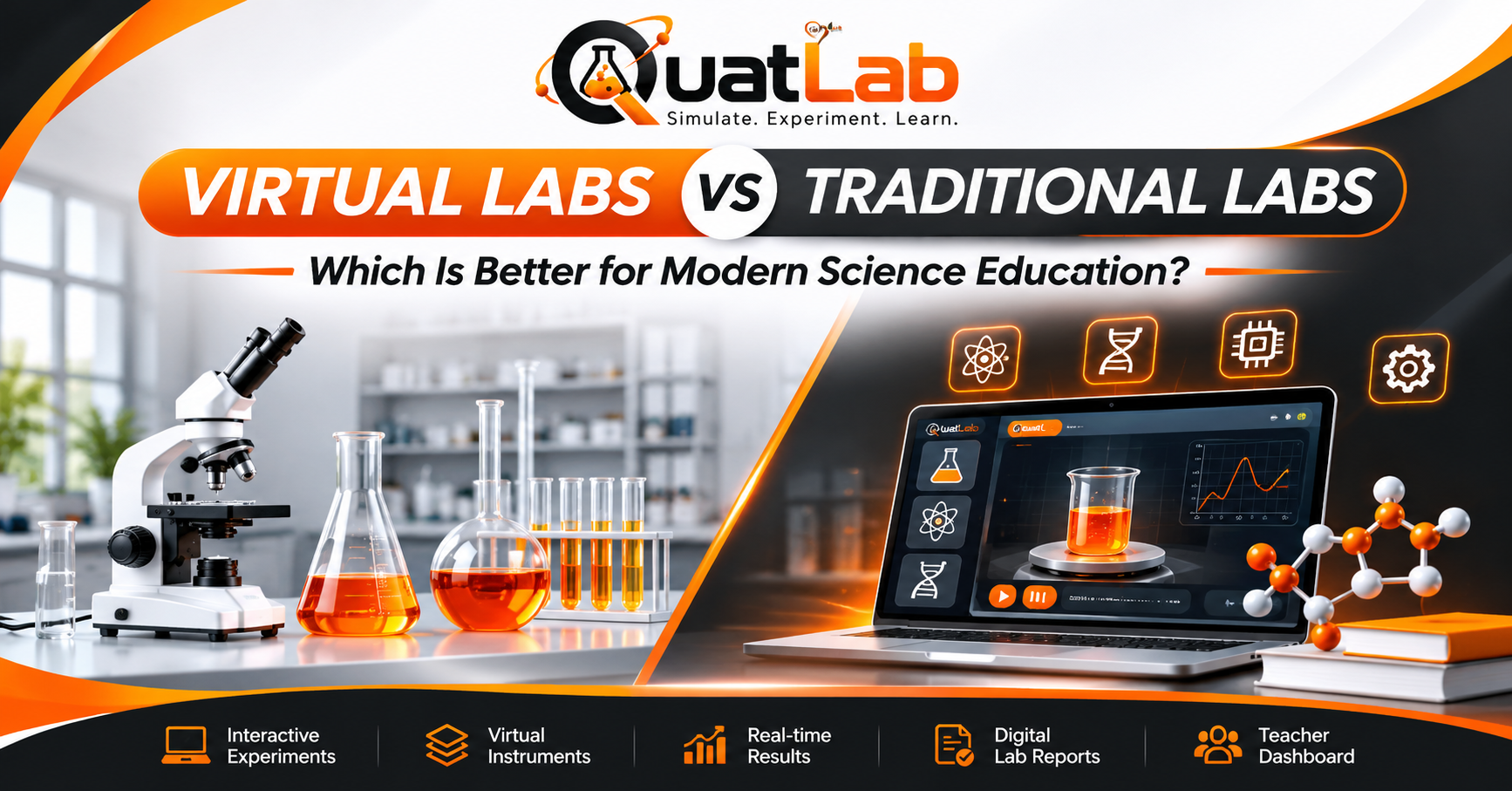
Both traditional and digital laboratories contribute to STEM education.
| Virtual Labs | Traditional Labs |
|---|---|
| Digital experiments | Physical experiments |
| Simulation-based practice | Hands-on practice |
| Flexible access | Scheduled access |
| Repeatable simulations | Physical experiment repetition |
| Digital visualization | Direct observation |
| Digital learning resources | Physical equipment and materials |
Virtual laboratories should not be considered a complete replacement for traditional laboratories.
Physical experiments remain essential for developing hands-on skills, while virtual laboratories provide additional opportunities for simulation-based learning.
Combining both approaches can create a more comprehensive STEM education experience.
9. The Future of STEM Education in 2026 and Beyond
The future of STEM education will increasingly involve digital learning environments, advanced simulations, intelligent educational tools, and interactive practical experiences.
Schools, colleges, and universities are exploring new ways to make scientific education more accessible and engaging.
Virtual laboratories can contribute to this transformation by supporting:
-
Interactive scientific experiments.
-
Digital practical learning.
-
Simulation-based education.
-
Flexible learning opportunities.
-
Technology-supported assessments.
-
Data-driven educational experiences.
As educational technology continues to evolve, virtual labs can become an increasingly valuable part of modern STEM learning.
Conclusion
STEM education is essential for developing the next generation of scientists, engineers, innovators, and technology professionals.
Virtual laboratories are creating additional opportunities for students to explore scientific concepts, perform simulated experiments, and develop practical understanding.
For schools, colleges, and universities, integrating virtual labs into STEM education can complement traditional teaching methods and create more interactive learning experiences.
With digital laboratory solutions like QUATLAB, students and educators can explore a smarter approach to practical education.
Simulate. Experiment. Learn.
Explore QUATLAB and discover new possibilities in interactive science and STEM education.
Visit: https://www.quatlab.com/
Frequently Asked Questions (FAQs)
1. What are virtual labs in STEM education?
Virtual labs are digital environments where students perform simulated experiments to understand scientific, mathematical, and engineering concepts.
2. How do virtual labs improve STEM education?
They support interactive experimentation, repeatable simulations, visual learning, and additional opportunities for practical understanding.
3. Which subjects can use virtual laboratories?
Virtual laboratories can support Physics, Chemistry, Biology, Electronics, Engineering, and other STEM-related subjects.
4. Are virtual labs useful for school students?
Yes. They can help school students explore scientific concepts through interactive experiments and visual demonstrations.
5. Can virtual laboratories replace traditional science labs?
Virtual laboratories complement physical laboratories but cannot fully replace hands-on experience with real equipment and materials.
6. How can colleges benefit from virtual labs?
Colleges can use virtual labs to extend practical learning opportunities, support digital experiments, and complement existing laboratory facilities.
7. What is QUATLAB?
QUATLAB is a virtual laboratory platform designed to support interactive experiments and digital practical learning across multiple scientific disciplines.