Introduction
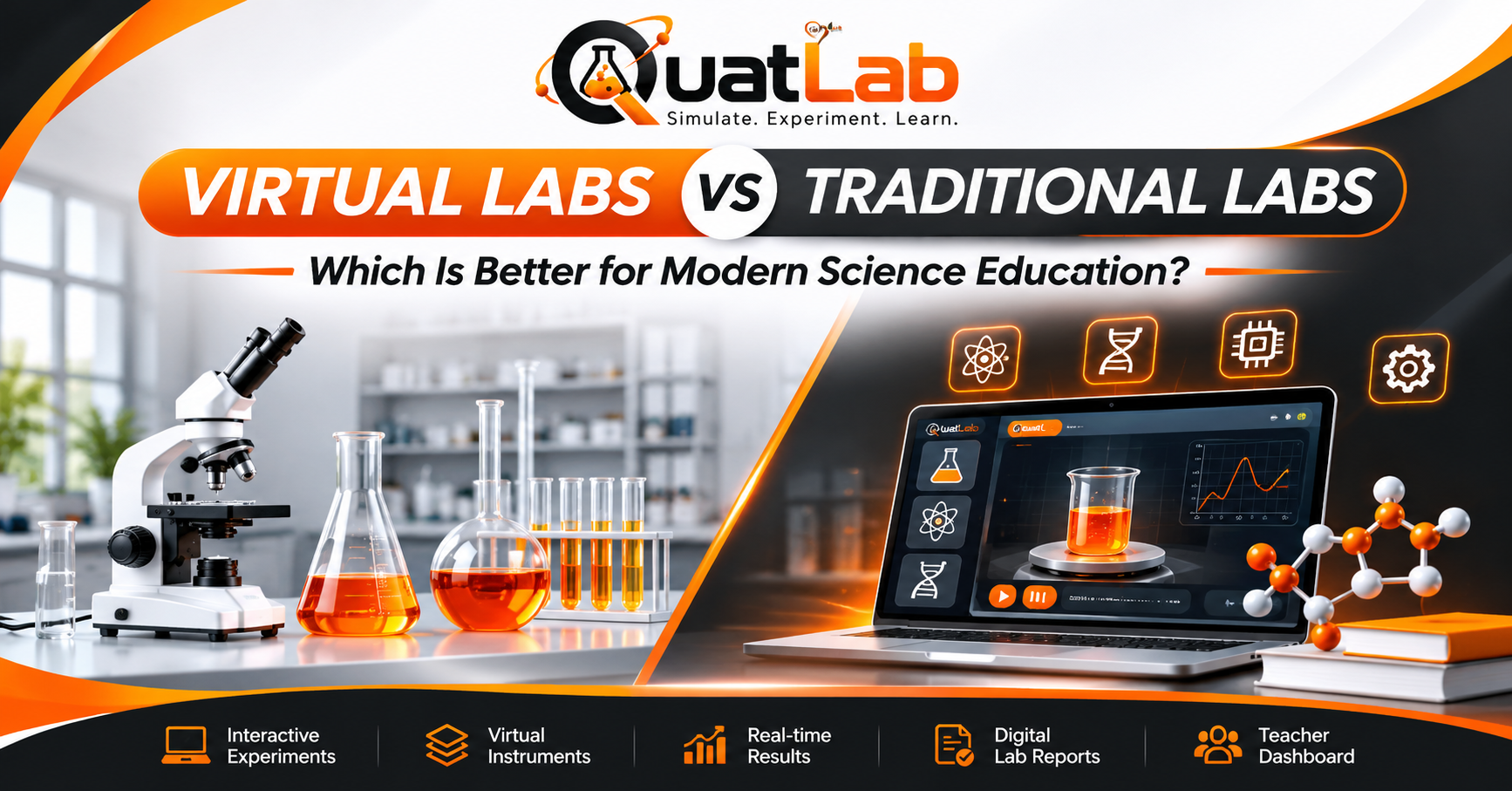
Science education has always depended on practical experience. Understanding scientific concepts becomes easier when students can observe experiments, test theories, and explore how things work in real-world situations. However, traditional laboratories often face challenges such as limited equipment, high maintenance costs, safety concerns, and restricted access.
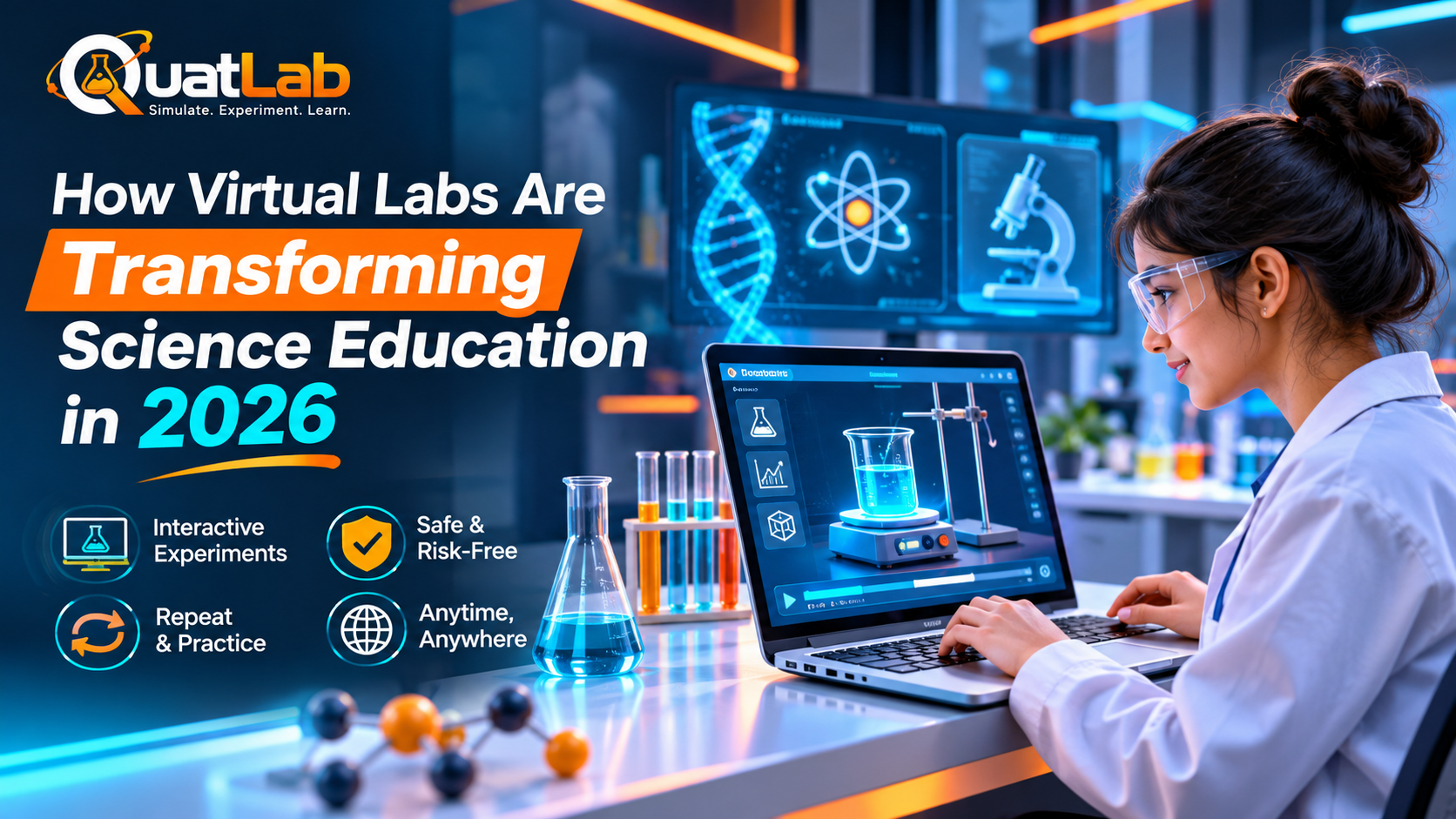
In 2026, virtual laboratories are helping educational institutions overcome many of these limitations. By combining digital simulations, interactive learning environments, and modern technology, virtual labs are creating new opportunities for students to gain practical knowledge.
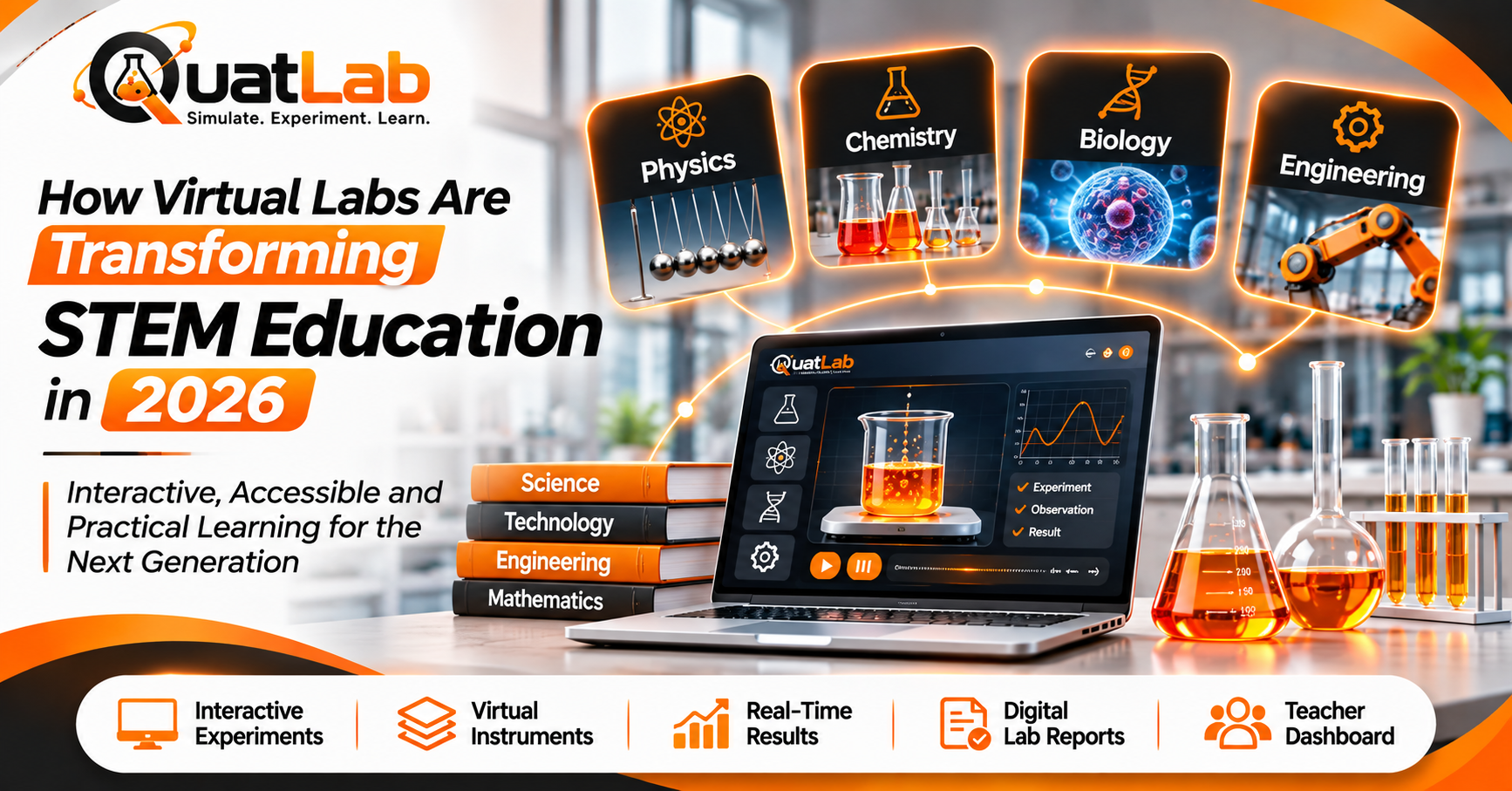
Virtual laboratories allow learners to perform simulated experiments, understand complex processes, and repeat activities in a digital environment. They are becoming an important part of modern science and engineering education.
1. What Are Virtual Laboratories?
A virtual laboratory is a digital learning environment where students can perform experiments through computer-based simulations. Instead of depending entirely on physical laboratory equipment, learners interact with digital instruments, models, and experimental setups.
These environments are designed to recreate practical activities and demonstrate how different scientific processes work.
Students can use virtual laboratories to:
-
Perform interactive science experiments.
-
Explore scientific principles through simulations.
-
Change experimental parameters and observe results.
-
Practice procedures in a digital environment.
-
Repeat experiments to improve understanding.
-
Develop problem-solving and analytical skills.
Virtual labs make practical learning more flexible and accessible for students and educators.
2. Making Practical Learning More Accessible
One of the biggest challenges in traditional education is providing every student with equal access to laboratory facilities.
Many educational institutions have limited laboratory equipment, space, or resources. Students may also have restricted access to laboratories outside scheduled practical sessions.
Virtual laboratories help address these challenges by allowing students to access digital experiments through compatible devices and internet connectivity.
This flexibility enables learners to explore practical concepts beyond classroom hours and revisit experiments whenever additional practice is needed.
3. Interactive Simulations Improve Understanding
Some scientific concepts are difficult to understand through textbooks alone. Subjects such as physics, chemistry, electronics, and engineering often involve processes that are easier to understand through visual demonstrations.
Interactive simulations help students observe these processes step by step.
For example:
-
Physics students can explore motion, force, energy, and electricity.
-
Chemistry students can understand molecular interactions and chemical processes.
-
Electronics students can experiment with digital circuit simulations.
-
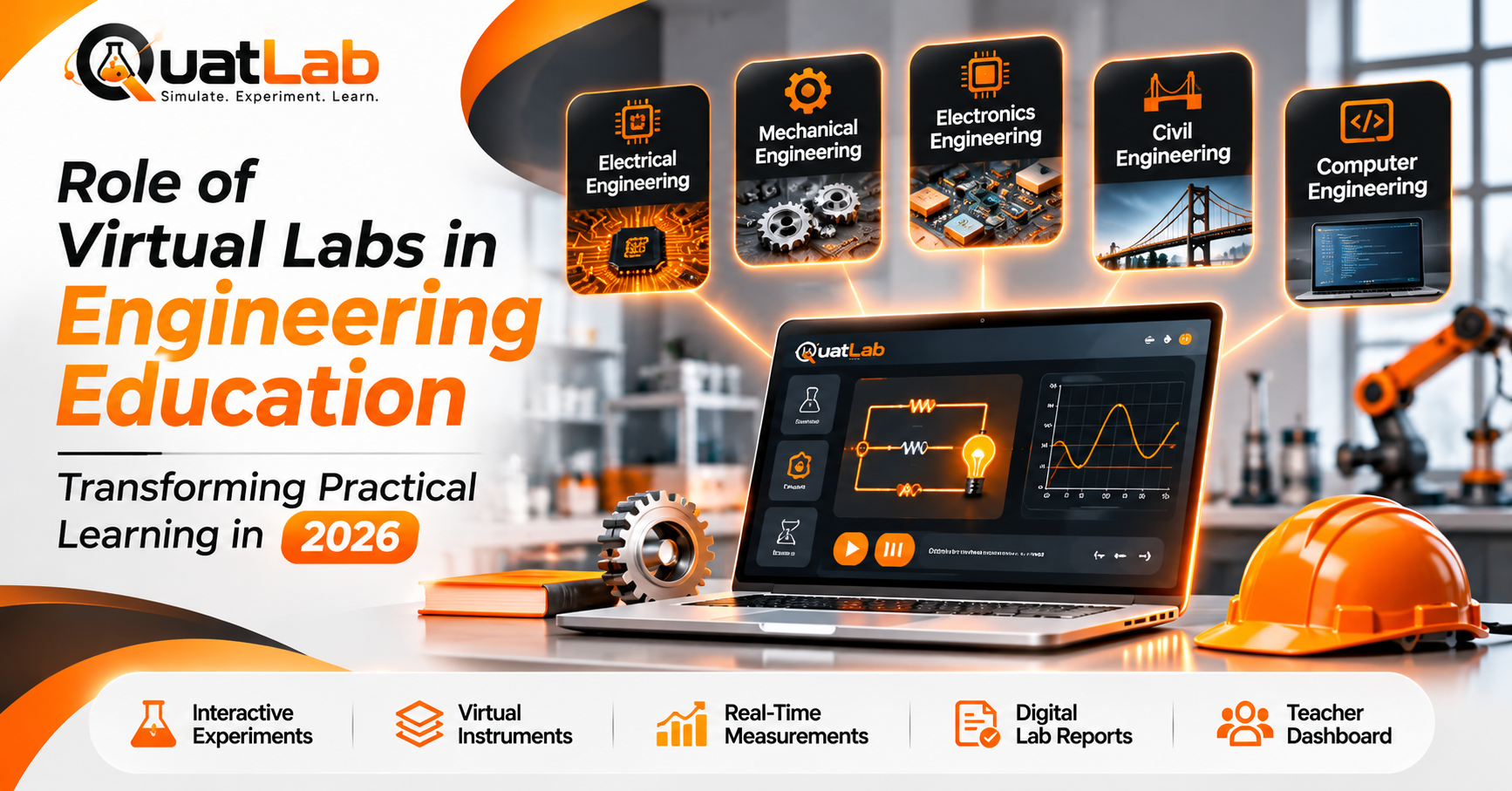
Engineering students can explore technical systems and simulated equipment.
By interacting with simulations, students can connect theoretical knowledge with practical concepts more effectively.
4. A Safer Environment for Experimentation
Laboratory activities sometimes involve chemicals, electrical equipment, heat, pressure, or complex machinery. These activities require proper supervision and safety procedures.
Virtual laboratories provide a digital environment where students can explore simulated experiments without direct exposure to the physical hazards associated with certain laboratory activities.
Students can practice procedures, understand experimental sequences, and learn from mistakes in a controlled environment.
Virtual simulations are valuable learning tools, but they should complement rather than completely replace physical safety training wherever hands-on experience is required.
5. Learning Through Experimentation and Repetition
Practical learning becomes more effective when students have opportunities to experiment, observe outcomes, and repeat activities.
In a traditional laboratory, equipment availability and time limitations may restrict how often an experiment can be performed.
Virtual labs make repetition easier. Students can restart simulations, modify variables, compare results, and observe how different conditions affect outcomes.
This approach encourages curiosity and independent exploration.
It also helps learners develop:
-
Critical thinking.
-
Analytical reasoning.
-
Problem-solving abilities.
-
Observation skills.
-
Experimental understanding.
6. Supporting Teachers and Educational Institutions
Virtual laboratories are not only useful for students. They can also support teachers and educational institutions.
Educators can use simulations to demonstrate complex concepts, prepare students before physical practical sessions, and create more engaging classroom activities.
Educational institutions can use virtual laboratories as additional learning resources alongside their existing laboratory infrastructure.
Some important benefits include:
-
Digital demonstrations for classroom teaching.
-
Flexible practical learning opportunities.
-
Additional practice resources for students.
-
Support for blended and online learning.
-
Better visualization of complex scientific concepts.
The effectiveness of these tools depends on appropriate curriculum alignment, teacher guidance, and the quality of the simulations.
7. The Role of Technology in Virtual Labs
Modern virtual laboratories use different technologies to create interactive and engaging learning experiences.
Some important technologies include:
Interactive Simulations: Allow students to control variables, perform virtual experiments, and observe outcomes.
3D Visualization: Helps learners explore scientific structures, equipment, and processes from different perspectives.
Artificial Intelligence: Can support personalized learning experiences, guided assistance, and intelligent feedback when appropriately implemented.
Cloud-Based Platforms: Can make digital laboratory resources accessible across supported devices and locations.
Learning Analytics: Can help educators understand student engagement and learning progress when relevant data is collected.
Together, these technologies are expanding the possibilities of digital practical education.
8. Why Virtual Labs Matter in 2026
Education is becoming increasingly digital, and institutions are exploring new ways to make learning more interactive and accessible.
Virtual laboratories support this transition by connecting theoretical lessons with simulated practical experiences.
They can be particularly useful for institutions that want to expand learning opportunities, provide additional practice resources, and introduce students to modern digital learning environments.
However, successful implementation requires more than technology. Institutions must consider learning objectives, curriculum requirements, usability, accessibility, and the role of educators.
9. The Future of Practical Science Education
The future of science education is likely to involve a combination of physical laboratories, virtual simulations, and technology-supported teaching methods.
Virtual labs can make experimentation more flexible, while physical laboratories continue to provide essential hands-on experience with real equipment and materials.
As simulation technologies improve, digital laboratories may offer increasingly detailed and interactive ways to explore scientific and engineering concepts.
The goal is not simply to move experiments onto a screen. It is to create better learning experiences that help students understand, practice, and apply scientific knowledge.
Conclusion
Virtual laboratories are transforming science education by making practical learning more flexible, interactive, and accessible. Through simulations, digital experiments, and technology-supported learning environments, students can explore scientific concepts in new ways.
For educational institutions, virtual labs offer an opportunity to strengthen existing teaching methods and provide students with additional practical learning resources.
As education continues to evolve in 2026, virtual laboratories will remain an important part of the conversation about the future of science and engineering education.
Discover Interactive Learning with QUATLAB
At QUATLAB, we believe practical learning should be engaging, accessible, and meaningful. Our virtual laboratory approach focuses on helping learners explore scientific concepts through interactive digital experiences.
Discover how virtual laboratories can support modern education and create new opportunities for practical learning.