Introduction
Practical learning plays an important role in science and technical education. Students understand complex concepts more effectively when they can perform experiments, observe results, and explore scientific processes themselves. However, traditional laboratories often require expensive equipment, dedicated infrastructure, chemicals, and continuous maintenance.
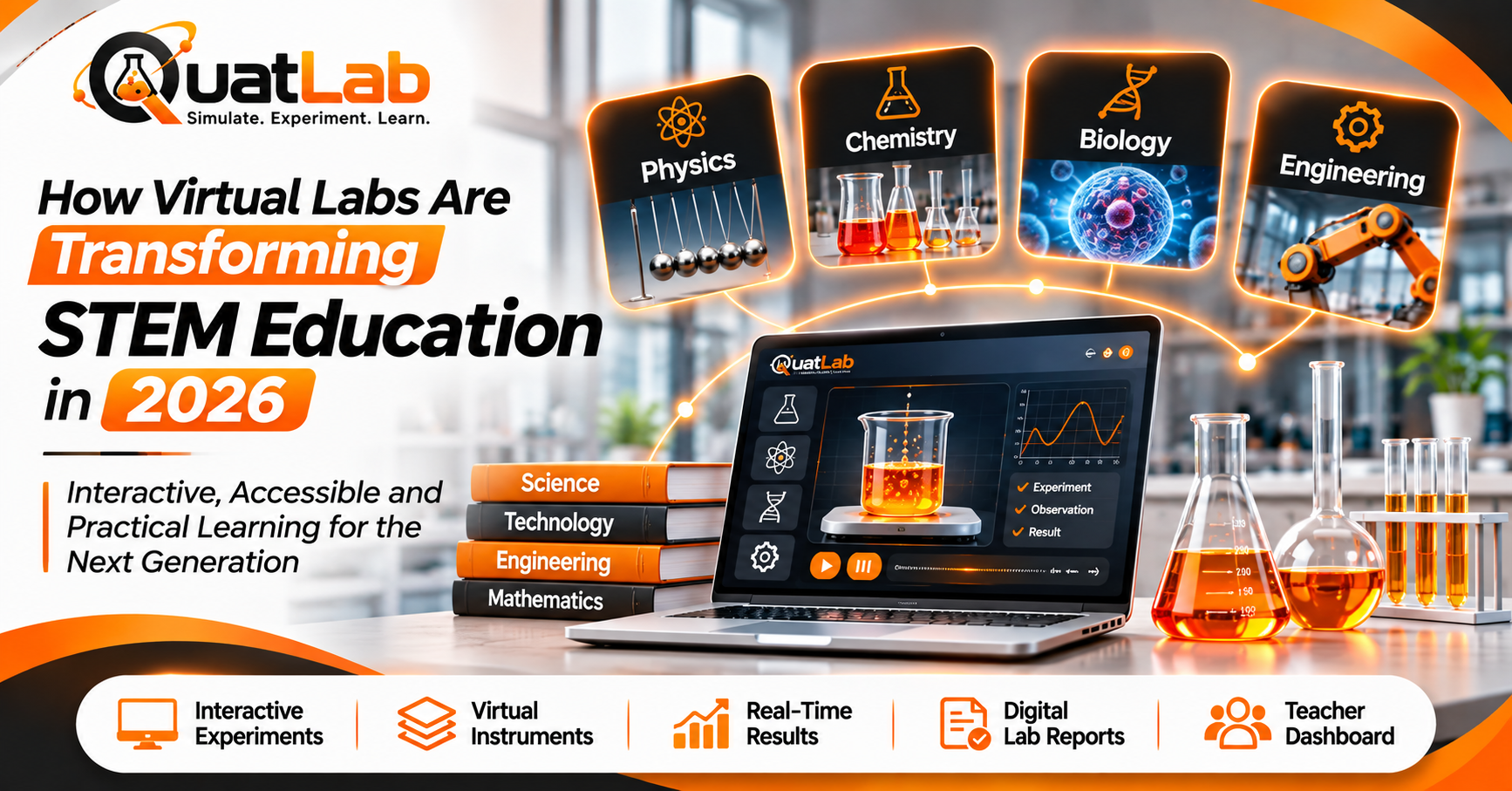
This is where virtual labs are changing the learning experience. Virtual laboratories use digital simulations and interactive technology to help students perform experiments in a simulated environment. They allow learners to explore scientific concepts, repeat activities, and understand practical processes without depending entirely on physical laboratory facilities.
With platforms like QuatLab, students and educators can experience a more flexible and engaging approach to science education.
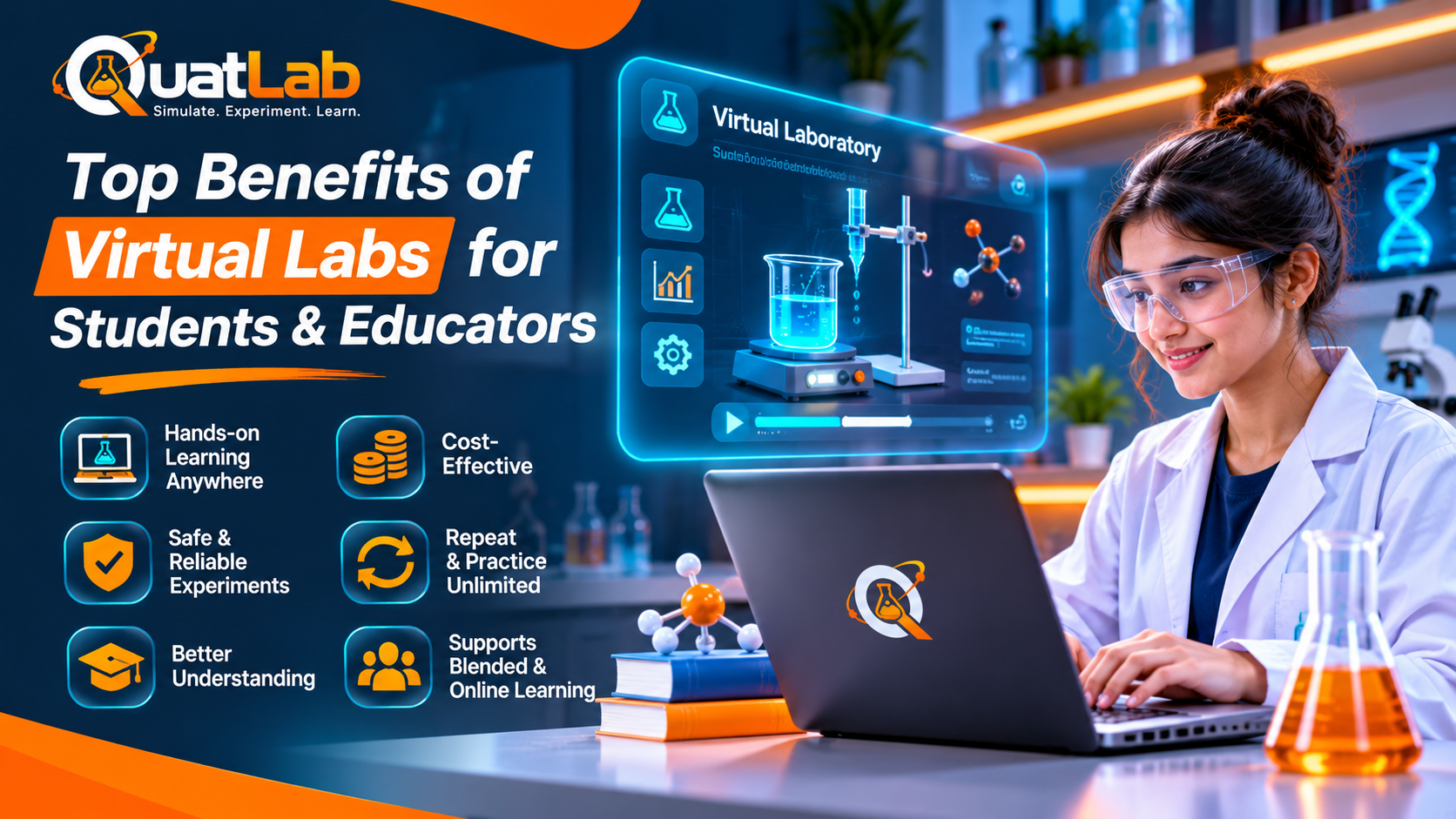
1. Hands-On Learning Anytime, Anywhere
One of the biggest advantages of virtual labs is accessibility. Students can access digital experiments from compatible devices without always needing to visit a physical laboratory.
This flexibility helps learners:
-
Practice experiments from home or college.
-
Access learning activities at convenient times.
-
Revise practical concepts whenever needed.
-
Continue learning through online and blended education.
Virtual labs make practical education more accessible to students across different learning environments.
2. Safe and Risk-Free Experimentation
Some laboratory experiments involve chemicals, electrical equipment, heat, or complex procedures. Beginners may find these activities challenging without proper supervision.
Virtual labs provide a simulated environment where students can explore experimental procedures without directly handling potentially hazardous materials.
Students can:
-
Understand experimental steps before practical sessions.
-
Explore scientific processes in a controlled environment.
-
Learn from mistakes without damaging physical equipment.
-
Build confidence before performing real experiments.
Virtual simulations support safety education, although they do not replace all physical laboratory safety training.
3. Cost-Effective Learning for Educational Institutions
Setting up and maintaining a traditional laboratory can require significant investment. Institutions need equipment, consumables, chemicals, laboratory furniture, and maintenance.
Virtual labs can help reduce some of these expenses by providing digital alternatives for selected experiments.
Key advantages include:
-
Reduced dependence on physical consumables for simulated activities.
-
Less equipment wear during digital practice.
-
Flexible access for multiple learners.
-
Opportunities to support larger groups of students.
This makes virtual laboratories a useful option for institutions looking to expand practical learning resources.
4. Repeat Experiments and Practice Without Limits
In a traditional laboratory, students may have limited time, equipment availability, or materials to repeat an experiment.
Virtual labs allow learners to repeat simulations and explore different outcomes.
Students can:
-
Perform the same experiment multiple times.
-
Change variables and observe results.
-
Identify mistakes and improve their approach.
-
Learn difficult concepts at their own pace.
Repeated practice can improve understanding and help students become more confident with scientific procedures.
5. Better Understanding Through Interactive Simulations
Some scientific concepts are difficult to understand through textbooks alone. Virtual labs make these topics more engaging by presenting processes through animations, visual models, and interactive activities.
For example, students can explore:
-
Chemical reactions and titration processes.
-
Physics experiments and motion.
-
Biological structures and processes.
-
Scientific measurements and observations.
Interactive simulations help connect theoretical knowledge with practical understanding.
6. Supports Teachers and Educators
Virtual labs are not only useful for students. They can also support educators in explaining complex topics and organizing practical learning activities.
Teachers can use virtual experiments to:
-
Demonstrate concepts during classroom sessions.
-
Introduce experiments before physical laboratory work.
-
Support remote and blended learning.
-
Encourage student participation.
-
Provide additional practice opportunities.
These tools can complement traditional teaching methods and make science lessons more interactive.
7. Encourages Independent Learning
Every student learns at a different pace. Some understand a concept quickly, while others need additional time and practice.
Virtual labs give students more opportunities to explore topics independently. They can revisit activities, test different conditions, and improve their understanding without depending entirely on classroom schedules.
This encourages curiosity, problem-solving, and active participation in learning.
8. Supports Online and Blended Education
Digital education is becoming an important part of modern learning environments. Virtual labs help educational institutions include practical activities in online and blended courses.
Students can use simulations alongside video lessons, digital notes, classroom teaching, and other educational resources.
This creates a more connected learning experience where theoretical and simulated practical activities work together.
Why Choose QuatLab for Virtual Learning?
QuatLab focuses on making science and practical education more interactive through virtual laboratory experiences.
A well-designed virtual lab environment can help students explore experiments, understand scientific concepts, and practice procedures through digital simulations.
With virtual learning tools, educational institutions can:
-
Make practical learning more engaging.
-
Support flexible access to experiments.
-
Help students understand complex concepts.
-
Complement classroom and laboratory teaching.
-
Encourage continuous practice and exploration.
The Future of Science Education
Virtual laboratories are becoming an important part of modern education. As simulation technology and digital learning platforms continue to develop, students may gain access to increasingly interactive and realistic experimental experiences.
Although physical laboratories remain essential for developing hands-on equipment skills, virtual labs can complement traditional education by providing additional opportunities to learn, practice, and explore.
The combination of physical experiments and digital simulations can create a more flexible and effective learning environment.
Conclusion
Virtual labs offer several benefits for students, educators, and educational institutions. From safer experimentation and cost-effective learning to repeated practice and interactive simulations, they provide new ways to experience science education.
By combining digital technology with practical learning methods, platforms like QuatLab can help make science education more accessible, engaging, and flexible.
Explore smarter science learning with QuatLab — Simulate. Experiment. Learn.